Best for
Aquariums where its role fits: centerpiece.
Symphysodon aequifasciatus
The discus is an advanced species because it needs stable high temperature, very clean water and careful group management. It is not inherently fragile, but it punishes maintenance mistakes quickly.
It does best in mature, spacious and calm aquariums with tankmates that tolerate long-term warmth. The goal is not mere survival, but good feeding, confidence, color and shape.
Expert calculator
Analyze volume, parameters, behavior and relationships with other species.
A practical summary to quickly decide whether it fits your aquarium.
Best for
Aquariums where its role fits: centerpiece.
Avoid
Mixes marked as high risk or not recommended in manual relationships.
Compatible with
Has positive or conditional references with species such as Cardinal tetra.
Typical risk
Bioload and adult volume should be planned with margin.
Aquarium zone
Quick compatibility
Review these points before adding it to your aquarium. They are practical notes based on its profile, ecological data, and known relationships.
Make sure your aquarium is above 250 L before buying it.
Do not keep it alone if it needs a group; plan space for the right number of individuals.
Plan filtration, water changes, and total stocking: this species can heavily load the system.
Avoid keeping it at the edges of its temperature range for long periods.
Parameters
Growth and behavior
Ecological profile
Common mistakes
Keeping it in tanks below the recommended adult volume.
Keeping too few individuals for a social species.
Keeping temperature at the edges of the range for long periods.
Symphysodon aequifasciatus + Paracheirodon axelrodi: cohabitation is usually viable if volume, parameters, groups and adult behavior are respected.
Symphysodon aequifasciatus + Corydoras sterbai: cohabitation is usually viable if volume, parameters, groups and adult behavior are respected.
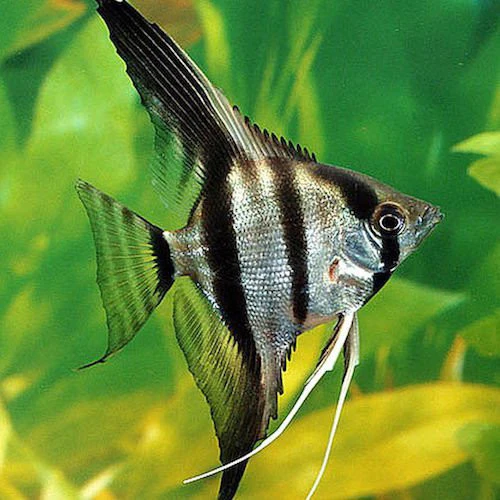
Symphysodon aequifasciatus + Pterophyllum scalare: territoriality, dominance or competition for calm areas of the aquarium may occur.
Symphysodon aequifasciatus + Corydoras aeneus: water parameters are not fully compatible or only overlap within a limited range.
Symphysodon aequifasciatus + Mikrogeophagus ramirezi: territoriality, dominance or competition for calm areas of the aquarium may occur.
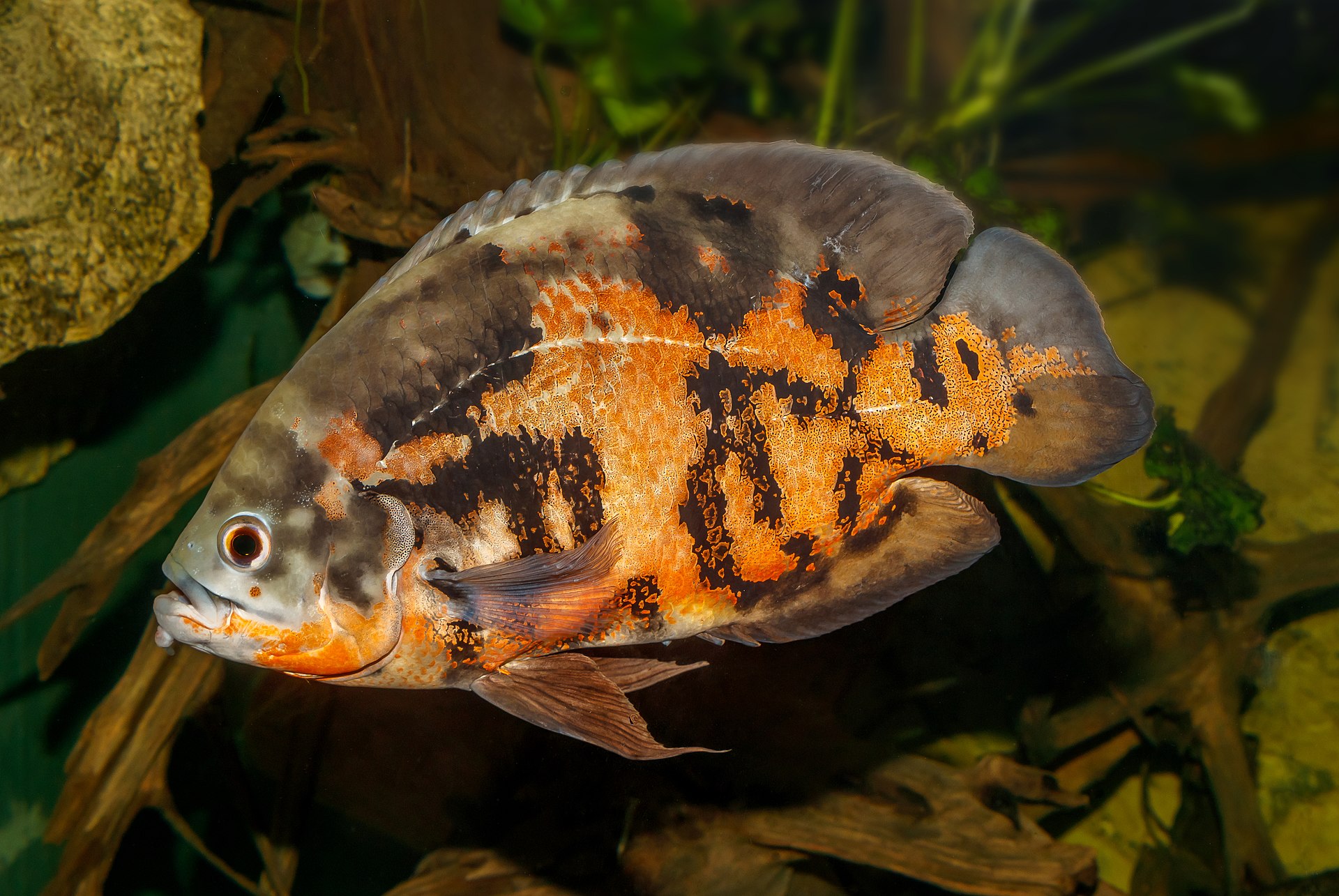
Astronotus ocellatus + Symphysodon aequifasciatus: territoriality, dominance or competition for calm areas of the aquarium may occur.
Carassius auratus + Symphysodon aequifasciatus: this combines coldwater or temperate species with tropical species that need different temperatures.
Symphysodon aequifasciatus + Corydoras paleatus: water parameters are not fully compatible or only overlap within a limited range.
Symphysodon aequifasciatus + Puntigrus tetrazona: there is a risk of fin nipping, harassment or stress in slow, nervous or long-finned species.
Keep high temperature, mature filtration and consistent water changes. Avoid cool-water, nervous or aggressive tankmates. Adult cardinal tetras and Corydoras sterbai often fit better than species that suffer long-term heat.
Pair breeding is possible, but requires stability, clean water and low pressure from other fish. Parents guard eggs and fry feed from body mucus, making the process experience-demanding.
Machos algo más esbeltos; hembras más robustas
Es una especie muy popular en acuariofilia
Se aprecia más cuando se mantiene correctamente
Editorial confidence
Content based on parameters, ecological profiles and manual relationships.
Related species to keep comparing habitat, size, and behavior.